Tuesday, June 18, 2013

Leaving Right Now - what do you have ready to go?

At the time of this blog entry, the 'Doce Fire' in Prescott, AZ is burning less than 20 miles from where Independence Training is based. It has consumed well over 3000 acres since it started about 8 hours ago, and more than 300 homes have been evacuated, most of those within the first few hours. Livestock have been hastily moved, family shelters have been quickly setup in school gyms and meeting halls, and there are approximately 300 firefighters on the ground with a half dozen aircraft battling it from the skies. The smoke plume is currently blocking out the sun and stretches for many miles to the north and northeast. No injuries have been reported and no structures have been directly threatened as of yet, but with red flag wind warnings forecast for tomorrow and a reported 0% containment level, those who are fighting this blaze have a lot of rough work ahead of them.

The smoke plume around 1pm on June 18, 2013, shortly after the fire started.

One of Independence Training's favorite airframes, 
the CH-47 Chinook, doing some air assault on the Doce Fire.

So what does this have to do with the Sheepdog Lifestyle? Let's approach it from this perspective: you are at home on another beautiful summer day, just like today, when suddenly you get a reverse-911 call and the dispatcher tells you that you are being forced to evacuate your home due to a wildfire that is burning dangerously close to your neighborhood. You have a very short time to get what you need - but what will you take? Consider that you may never see your home again; or if you do see it again it will be a pile of ashes. What if the evacuation comes because of a flood? The local Sheriff's Department is outside waiting, but you only have 15 minutes to get the most important things in your life - survival necessities, family photos, vital records, irreplaceable heirlooms - and you have to be able to carry it all with you, because driving out isn't an option. You can see where this is going: do you have everything that is vital to your survival, and the survival of your family, in an easy to carry setup? And for whatever you can't carry, can you fit it into that large fireproof and theft proof safe that you own? Wait - you do own a safe like that, right?

They are called by names such as Bug Out Bags (BOB), 72 Hour Kits, and Emergency Kits, and while a lot of people are familiar with this concept, few actually put one together for every member of their household and then regularly update them. Even worse, many will go out and purchase the "magic talisman kit"; that is, they will buy a pre-made kit that is generally not suited to their situation and typically filled with cheap, poorly designed items that often fail when put to use in the real world. These kits are almost more dangerous than having nothing, because at least if you have nothing then you know you have nothing. But if you have a cheap "magic talisman kit", which was just another checkmark off the ol' "emergency prep" checklist, then when you need it you'll think you have something, and quickly find out that you still have nothing. Remember that these kits aren't put together because they are the best option for you and your family - they are put together with bulk high profit margin items in order to sell you something and make someone else some money.

Pre-made emergency kits or "survival kits" often won't fit your 
real world needs, and are usually made up of cheap items that may 
fail you when you need them most.

Building your own kit is always a better idea, and here are some thing to consider when doing so. Keep in mind that this is not a complete list, nor is it all that we recommend putting into an emergency kit, but rather it is a list to get some ideas rolling. Kits should be size appropriate for the age of the person who will be carrying it as well as their physical fitness level. Your 8-year-old daughter is not going to carry a 30lb pack for very long, if at all, and neither will the 40-year-old man who is woefully out of shape. In this case, less is usually more, especially if you are on foot or limited by authorities on how much you can take. Focus on multi-purpose items and lightweight options.
  • Sturdy pack designed for carrying large loads for long distances
  • Sleeping equipment, include a shelter or shelter materials of some kind
  • Extra footwear, already broken in and similar to what you are used to wearing
  • Full change of clothes
  • Gallon of water, small water filter (Lifestraw!), and water bottles or other containers
  • Medical kit, including any needed medications
  • High energy snacks and meals for at least 3 days - canned goods and MREs are useful here
  • Eating utensils, small pot or metal cup, small stove or heating unit
  • Tools: knife, small shovel, rope, multi-tool, etc.
  • Flashlight (2 is better than 1), extra batteries, candles/chemlights
  • Survival supplies: fire starters, compass, mirror, whistle, whetstone, etc.
  • Hygiene items (hotel hygiene items are a good option and you can get all you want at the hotel desk)
  • 2 way radios and extra batteries, or even better a HAM or CB radio
  • Family photos and important documents scanned and put onto a USB flash drive
  • Picture IDs for everyone in case ID is needed for shelters, evacuations, missing persons, etc.
  • Personal items: books, note taking gear, toys for kids, diapers for babies, etc.
Now that you've put something together, remember to check it on a regular basis - we recommend a minimum of at least once a year. Medications will expire, food will lose it's nutritional value or become dangerous to your digestive tract, and whoever has stashed clothes in that kit may grow or lose weight and need to change out a few items. We once had a student show us their kit and they pulled out diapers for their now 10-year-old son! And of course we have to mention training here, as emergency kits are not "get and forget" gear. They need to be practiced with and used regularly enough so that when the time comes that you have to use them in an emergency there will be nothing in your kit that you are unfamiliar with or pulling out of a package for the first time. Take them camping with you, or better yet plan a camping trip around using only your kit and its contents. Plan a night in your home where you are not allowed to use lights, natural gas, or anything from the pantry or cupboard and use only what it is in your kits instead. Make it a fun adventure with your friends or family, but keep it serious enough that you realize what needs to be changed out or rotated from your emergency kit.

So now let's switch things up a bit. What if you are in your vehicle, traveling home or perhaps you're even way out of town, and find out that you will be stuck wherever you're at for an extended period of time, or perhaps will be unable to go home since the fire/flood/tornado/hurricane is in your neighborhood wreaking havoc? Perhaps you will not be able to get to your home in time to save anything - so what do you have on you when you are not at home?

The answer is simple: basically the same things you would have on you if you had to leave your home! We call it the Get Home Bag, and it's come in handy for several of our instructors on several occasions, from natural disasters keeping them away from their homes to simple vehicle breakdowns or travel delays. Your Get Home Bag (GHB) should stay in your vehicle or travel with you wherever you go, at least in some configuration, including in rental cars, traveling with other people, on airline flights, etc. Some extra things that you may want to add to your (GHB) include cash and silver coins or other currency (in case you need to purchase something when the electricity is out or similar situations), gloves, some kind of optic (binocular/monocular), extra ammunition if you normally carry a firearm (where legal), a firearm if you don't normally carry a firearm (where legal), and wet weather gear. In your vehicle you should also consider having extra food, water, medical supplies, flashlights and other light options, sleeping bag or blankets, jumper cables or booster pack, and vehicle related tools and spare parts, among other situation-dependent items.
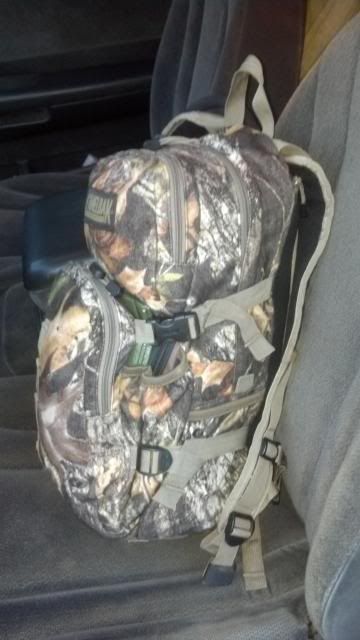

Our head instructor, Glen, keeps this 'Get Home Bag' 
and other emergency items in his truck at all times.

The moral of the story is this: good people are forced into tough situations every day. Based on what we typically see at the sites of many disasters and shelters, most of them are terribly unprepared for it. While you can't prepare for everything, you can prepare for a lot of things, so don't get caught unprepared when all it takes is a few minutes and a few dollars to put some good kits together. It will be time and money well-spent.


Stay Aware, Stay Safe, and Train Hard.


Wednesday, April 17, 2013

Having 'the talk' with your kids . . . . the gun talk, that is.

As parents, we hope that our children always make the best possible decisions when faced with a tough choice. Right vs. wrong, relationships, drugs, college, and careers - these are just a few of the decisions that we hope and pray our children choose the correct path with, and their decisions are often partially based on the information that we've shared with them. One of the paths of life that our kids also need assistance with is the safe handling of firearms, since we live in a gun culture and youth are very likely to come in contact with firearms at some point. Even if their household has no firearms, there's a good chance that someone in their circle of friends does.

Whether you were raised with firearms in your home or not, and regardless of your choice of firearm ownership now, it's vital that you get the kids in your life trained properly so that they know what to do if they find or see a gun, whether in your home or someone else's. We recommend getting them into a professional training program, whether through the NRA, Hunter's Education, or a private training organization like us (Independence Training). The benefit of this, even if you as a parent are an accomplished hunter or shooter, is that your kids will get to hear someone else reinforce what you've been probably been teaching them already, and trust me - they'll get more out of it. Professional firearms instructors tend to have great experience with safety and what happens when the rules are broken, and can pass on additional information to your kids that you may not know about. In fact, taking a course with your kids is a great way to not only spend time with your kids, but you may learn something new yourself! Even as professional instructors, we still get other instructors to train our kids when they reach a certain age. There's no such thing as too much training, especially when it comes to our kids and safety.

One of our future instructors learns the ins and outs of the M32 MGL.

Now that you and your kids are on the same page with safety, what about their friends? What do you know about the safe storage of firearms at the locations where your kids spend time? Often times we talk with the parents of our kids' friends about video game limitations, food allergies, or swimming pool fences, but we leave out asking about firearms in the home. While the question of "Do you have guns in your home?" isn't a question that most of us would normally answer if asked by someone not close to us, if a concerned parent who had a child in your home asked it, you should be happy to tell them about the safe storage methods that you employ to keep your firearms secured from unauthorized access. It's also important to rememeber that there are kids out there who have parents in the traditional sense of the word (mom and dad) but those parents may or may not be taking an active role in the raising of their children, such as teaching them about safe habits. Even parents who are actively engaged with their kids may not own firearms or be familiar with them, and even some of those who do own firearms do not know much about safely securing them. Don't be afraid to ask!

So now that your kids are properly educated, and you know that firearms are secured in your kids' most common hangout spots, how do you remove the mystique and curiosity surrounding firearms? Remove the mystery - it's what we teach to our students, and practice with our own kids. In homes where the guns are a "never touch" kind of issue, or "hidden" or explained as "dangerous," the kids are more likely to try and get to them. It's a curiosity thing, plain and simple, so remove the mystery. Not only should you talk with your kids about firearms safety, but also allow them to handle properly unloaded firearms while teaching them about safe handling. Show them how the firearm and ammunition work mechanically, then explain simple ballistics. Talk to them about the history of firearms and the Second Amendment, and why firearms are an important part of American culture. If they ask to see your guns, set some time aside to show them in a safe manner, and if they ask to go shooting, set time aside to do that, too. Make sure to cover what they should do if they see a firearm in someone else's home, or are asked by their friends to play with real firearms. To sum it up: Don't Touch and Leave the Area! Be sure to practice what you preach, however - if you do unsafe things with firearms, your kids will follow suit. But if you teach that a firearm is simply a tool, albeit a powerful tool, and not some dangerous killing machine, then your kids will start to see it as just that - a tool for certain jobs, nothing more.

While accidental shooting deaths amongst children are more rare than the media hype would have you believe, they do still happen, and to this date we haven't read or heard about one where the firearm was toally secured or the child educated before the accident. So regardless of how old your child is, or what their experience level with firearms is (video games don't count!), please talk with them and those that they spend time with about firearms safety. Feel free to use our "THINK Safety" firearm safety rules document below (the same thing we teach in all of our courses) to help you accomplish having "the gun talk" with your kids.


Stay Aware, Stay Safe, and Train Hard.


Friday, February 22, 2013

Outdoor Training vs. Indoor Training - a look at the pros and cons of shooting ranges

There are many different types of shooting ranges where you can train and practice your firearms proficiency, and they all have their pros and cons in regards to setup, construction, and location. They really only break down into two different categories, however, and those are Outdoor and Indoor. Based on my experience with both types of facilities, I've found that each one has a kind of "following" - in other words, those who train outdoors rarely train at indoor ranges, and those who train indoors rarely venture into the outdoors to train. Based on my discussions with our students, I believe that this is largely due to people becoming accustomed and comfortable with their surroundings, especially those who are fairly new to shooting, and they don't want to change anything for fear that it will alter what they are capable of accomplishing. There are a number of reasons that we, as a training organization, prefer to train and shoot in both types of ranges, and as Sheepdogs, you'll want to train at both types of ranges, as well.

Outdoor Ranges


We train at outdoor ranges all over the southwest, and from well-developed square ranges with full service facilities to simple private ranges with a mountain as a backstop, training outside offers several major advantages:
  • The ability to shoot in several different directions, not just straight forward.
  • Training in adverse conditions (hot, cold, wind, etc.) stresses fundamentals and allows for a true test of your skills.
  • Firing lines can be bigger with more capability for movement and alternate shooting positions, such as fighting from the ground or shooting from a vehicle.
  • Lower cost, especially in locations where public land is available for training or shooting.
  • Shooting to extended ranges as far as the eye can see.
  • Utilizing different types of targets, from traditional paper to steel and exploding targets.
  • Being outside and breathing fresh air is good for you!
 
Anytime that you get something, you give something, however, and that is certainly true with outdoor ranges. Here are some potential downsides to training outdoors:
  • Weather is a major contributing factor, and while some of us enjoy training in adverse conditions, it can be a real challenge to teach the fundamentals of shooting to a new shooter in 30 degree weather while a 15mph wind blows across their face. Keeping a full firing line of shooters engaged for 8 hours in 100+ degree weather can also be a challenge.
  • Target frames and target systems at outdoor ranges are largely static, meaning that while the shooter can move, the target cannot. While some ranges have moving target systems available, this is not common nor is it inexpensive.
  • Learning how to shoot and move in low-light/no-light conditions, a skill that is absolutely vital to the armed citizen, police officer, or military member, can only be done once the sun goes down. Depending on the time of year, this can limit the amount of training that can be done due to time and temperature.

Indoor Ranges


We have recently started offering our training at an indoor shooting range, specifically the Copper Star Indoor Shooting Range, located in Camp Verde, AZ. This is a top-notch facility that is very modern and very capable of allowing you to do things that wouldn't be possible at an outdoor location. Unfortunately, not all indoor ranges are created equal, so be careful about which one you choose. Ask about their safety policies, who they allow to use the range and under what conditions, the quality of their air filtration systems, and when the last time they had a firearm-related accident was. That being said, here are some important advantages that indoor ranges have:
  • They are not weather-dependant, so regardless of what's happening outside, you can always be training outside. And just because they aren't weather-dependant doesn't mean you can't add some adverse conditions inside. Want to train in the heat or the cold? Just adjust the thermostat.
  • Due to the nature of the range, shooting at an indoor facility very realistically replicates what it would be like to fire you weapon inside of your home or other building. And while this may seem obvious, it's something that most shooters don't consider. If you plan on using that firearm in self-defense, you should know what it sounds and looks like when it's fired indoors, 'cause that's a whole new experience.
  • Want some low-light conditions or darkness to train in or test gear with? No problem - just turn out the lights. You can also add different types of lights, such as red and blue flashing lights for law-enforcement training.
  • Target carrier systems indoors are capable of doing things that it's very difficult to replicate outdoors. Want your target to charge you at adjustable speeds, or turn from a shoot target to a don't shoot target and back again? No problem.
  • When checking point of aim/point of impact (POA/POI) or zeroing a firearm, it's easy to send the target out to an exact distance and then change that distance on the fly.
  • Indoor ranges often have a selection of rental firearms, from the normal to the exotic, and they always have ammunition, hearing and eye protection, and other accessories available for purchase.
 
Just like an outdoor range has its downsides, so does an indoor range, so here's a few of the limitations you may experience:
  • Shooting indoors is LOUD, much louder than outdoors. It's best to wear ear plugs and muffs, preferably electronic muffs.
  • There's only so much room, meaning that you may have to wait to shoot, and once you get in there, you'll usually be paying by the hour if there are other people waiting for you to finish.
  • That limited space also means that there are some types of training and shooting that you cannot do, such as moving and shooting, shooting in multiple directions, shooting from certain alternate positions, etc.
  • Lead contamination is an always present factor, and regular soap and water isn't enough to wash up with. Use deleading soap or deleading wipes on your face and hands after each range use, especially if you are going to eat something. If you are in there for an extended period of time, make sure to wash your clothes and take a shower as soon as possible, and don't wear the shoes you were wearing in the range inside your home (especially if you have little kids who may crawl on the floor).
 
How Our Training Differs Based on Range Location

The differences between outdoor and indoor ranges mentioned above have an effect on the training courses that we offer, and while the concepts that we teach in each course stay the same, the skills that are taught vary. There are even some courses that we simply cannot teach at an indoor range, and some that we cannot teach at an outdoor range. If you've taken one of our courses indoors, you've had a different experience than if you would have taken it outdoors, and vice versa. This is simply because of the benefits and the limitations of each location. As an example, in our Defensive Handgun course, we utilize a lot of movement on the student's part while they engage steel targets of various sizes when this class is taught outdoors. This can cannot be done indoors, however, so we instead utilize the forward, backward, and turning movement capabilities of the targets themselves, which have been pre-programmed beforehand, and use full-size 3D torso targets wearing clothing to teach the same concepts.

Any student who takes the same course but at different range locations will have a slightly different experience, and have the opportunity to build different skills. This is part of the reason that we offer all of our students a chance to take the same courses over again as a refresher for only 50% of the normal course cost. Many of our students take advantage of this, even training at the same locations just to reinforce what they have already learned and to refresh what they have forgotten since the first time around.

As always, there's no such thing as too much training, and there's no such thing as someone who knows everything about anything, so take advantage of every chance you have to shoot and train in a new location, whether outdoors or indoors, as each experience will offer you new opportunities to expand and increase your skills as a Sheepdog.


Stay Aware, Stay Safe, and Train Hard.


Tuesday, January 1, 2013

I Am The Bullet

In light of recent events and the discussions and arguments surrounding the merits of gun ownership in our Country, I wanted to share with you an article that I have considered to be one of the best on the topic since I first read it in SWAT magazine years ago. It was written by the great Louis Awerbuck, creator and director of the famed Yavapai Firearms Academy. Please read it thoroughly, as Louis pulls no punches with the messages he chooses to deliver.

-----------------

I AM THE BULLET...
BY LOUIS AWERBUCK
Reprinted With Permission of S.W.A.T. Magazine, Copyright 2005.
As seen in S.W.A.T. DECEMBER 2004 - Page 98
www.swatmag.com

I am the bullet — and I have no conscience. You will treat me with respect because once I leave, you have no control over my actions. Once I’m gone I will do as I please, governed only by the laws of physics. And the next time you see me I will have done my work, bringing on your life a potential gamut of emotions ranging from pleasure, satisfaction and exhilaration to anger, pain, grief and regret. Use me wisely and with discretion, for I can snuff out the flame of a king’s life as easily as I can bring delight to a ten-year-old’s face by recording for posterity a first bullseye on a humble paper target.  

It took the fire of a crucible to conceive me, but now I’m no longer molten metal — and therein lies the deceptiveness of my power. When I was cast in the mould of hot lead you knew I was dangerous, but now you underestimate me as I lie in the womb of the cartridge case, a solidified metal teardrop the size of your fingernail. Beware, for the day I’m born I will go from womb to tomb in the fraction of a second. For me there will be no childhood, no puberty, no adulthood — just a nano-second of flight before I find my terminal resting place.  

You must be mother, father, teacher, and priest, because you will guide me on my short life’s path. I am but an emotionless, inanimate object with no heartbeat and no conscience. Once the hot gases of propulsion give birth to my destination, they will also signal my death knell, for I will have no childhood, no puberty, no adulthood. Instant birth to instant rest, with but a momentary tick of the clock of time to bring pleasure or pain. The responsibility for my actions rests squarely on your shoulders. You conceived me, you entombed me in a cartridge case with my brother primer and sister gunpowder, slaves to your bidding. If you didn’t cast, size, lube and load me yourself, you bought me just like you bought Mister Gump’s box of chocolates. But unlike the box of chocolates, with me what you see is what you get. I am the corked bottle encasing a quiescent genie. Once the genie is free, you know exactly what potential can be unleashed — but you had better choose your three wishes wisely.  

The acquisition of firearms and ammunitions is sequential, one way or the other. Rarely does one initially have a vast supply of ammo of a specific caliber and subsequently acquire a firearm to use or expend this supply. While people often buy a secondary or tertiary weapon for this reason, usually one purchases the gun, cleaning equipment, accessories, and a storage unit — be it a case, bag or gun safe — before any thought is given to what ammunition is going to be obtained and used in the weapon. And after spending a king’s ransom on all this equipment, you head for the local gun emporium and spend a pittance on a case of the cheapest garbage military surplus ammo you can find.  

Then when you miss, you blame it on me. When you accidentally discharge a firearm because you neglected to extract me from the chamber, you blame it on me. When I plow my way through bone and muscle, and fail to incapacitate a madman, you blame it on me. But when you achieve the result you wanted, then it’s because of your masterful ability, and I’m forgotten — used, expended, and spent.  

Such is my lot — Man’s ingratitude and lack of respect for the humble bullet. Because you paid for the ammunition, I become your possession; but you don’t own me — I own your soul. I will make you or break you in my short lifespan. The slightest marksmanship error on your part and I will embarrass you in front of your peers. The slightest lapse in concentration while manipulating a firearm and I will take an innocent life. I will ricochet off a windshield, a belt buckle, or a baseball cap bill when you’ve been told I should have penetrated the material — and I will just as easily over-penetrate an apartment wall and forever snuff out the future of a defenseless child.

Doctor Mann spent a lifetime trying to find out why I didn’t always perform as external ballistics would demand I do — and he went to his grave with my secret intact. But you insist on imbibing alcohol and firing bullets into the air in a puerile Yuletide celebration, understanding nothing of the physics of my flight path — or my power to change your life forever. 

You will spend endless hours discussing the merits and demerits of my size and velocity, but when all is said and done, it really doesn’t mean anything. The truth of the matter is that once I depart from your gun muzzle you no longer have control over me — and I, too, no longer have control over my own destiny.  

The next time you see a humble un-fired bullet remember that without me your gun is as useless as fingers on a rooster. And once loaded, I can be as dangerous as a drunk in rush hour traffic. Once my power is unleashed, there can be only two results — delight and satisfaction, or disaster and horror. And this will reach fruition in the blink of an eye, for I have no childhood, no puberty, no adulthood.  

Treat me with respect, for I am the bullet — and I have no conscience.
 
----------------- 
 

Stay Aware, Stay Safe, and Train Hard.


Friday, November 30, 2012

What the Zombie Apocalypse Means To You

Zombies - these days, they're everywhere. Not real zombies, of course, but the idea of zombies has found its way into just about everything: zombie survival kits, zombie books, zombie clothing, zombie movies and TV shows, zombie pepper spray . . . . even Gerber has made a line of zombie-themed blades. And the gun industry is no exception, as we have zombie targets, zombie bullets, zombie-themed guns, and companies such as EOTech have created zombie-specific red dot sights and other firearms equipment. It seems that people just love the idea of the undead rambling around looking to eat the brains of the living.

Zombies - why won't they just die?

Personally, I could do without all of this zombie nonsense, but it certainly does serve a purpose, and that purpose is more helpful than you may think. When the zombie craze spilled over into the gun world, I was dismayed, since I felt that it reduced the seriousness of firearms in the eyes of some people and relaxed the high level of responsibility that goes hand-in-hand with firearm ownership and usage. And while I do still somewhat believe that to be true, I've also seen something that has surprised me somewhat: the zombie craze has gotten more people into the shooting sports, and in a good way. The concept of a 'zombie apocalypse' has actually been a move in the right direction for many citizens, as they scramble to buy up and learn to use survival supplies that they normally would've never thought to own except when they were re-labeled with the word 'zombie.'

It's not hard these days to find a 'zombie survival kit' which could include everything from normal survival supplies to sharp instruments and tools with which to destroy a zombie's brain - or seriously help you in a real emergency. Like many survival kits, those that are zombie related aren't necessarily the best choice for every situation, and often include items of poor quality and things that you really wouldn't actually need - but they are better than nothing, which is what a lot of people had before all this talk of a zombie apocalypse.

 One of many 'zombie survival kits' - better than nothing!

While there may never be a real zombie apocalypse, the benefits of endorsing greater preparedness and self-reliance amongst the general citizenry are very real indeed. Even the Center for Disease Control (CDC) has gotten on board with a 'Zombie Preparedness' section on their website, in which the CDC director, Dr. Ali Khan, says, "If you are generally well equipped to deal with a zombie apocalypse you will be prepared for a hurricane, pandemic, earthquake, or terrorist attack." Dr. Khan certainly has a good point, as the zombie apocalypse would certainly reduce access to food, water, medical supplies, fuel, tools, and means of self-defense, all of which would also be limited by just about any natural disaster or civil emergency. And in the zombie apocalypse, you've got to be able to carry your supplies, as you may have to leave your home. The same can almost always be said in a real natural disaster, such as a wildfire or hurricane, where you may need to leave your home for several days at a time, or maybe forever. Consider the most recent disaster that our country has faced, which was the devastating power of Hurricane Sandy. So many of our neighbors were forced to flee their homes, some returning home to nothing. I sincerely hope that many of them thought ahead and had some basic survival and comfort supplies, as well as important documents and family photos, stored away in a pack or bag that they were able to take with them.

A neighborhood hit by the recent Hurricane Sandy - a little
preparedness can go a long way here.

The zombie apocalypse ideas sweeping the nation certainly annoy some people, and most definitely encourage some of the weirdos to be even weirder; but it can also help us all to take a look at our emergency preparations and find the holes where we could do better. Do we really have the tools and supplies to survive a disastrous event? Do we have the training and skills to keep ourselves and our loved ones alive and safe? And if we had to leave our home, for whatever reason, can we carry the essential equipment needed and do we have the physical fitness to get the job done?

Whether or not you buy into the zombie apocalypse doesn't really matter. What does matter is that considering a major event, even something as silly as zombies, can do great things for your own mindset and preparations. As for us here at Independence Training, we're not too worried about zombies, but we're always striving to help people become more confident and self-reliant, whether for the zombie apocalypse or an actual real-life emergency. That is the way of the Sheepdog Lifestyle - to learn something new each day and to strive to become a better person each day. So once I finish typing this, I'm off to buy one of these, and then spend the afternoon practicing my hack-n-slash skills:

Gerber Gator Machete Pro - for hacking brush, large vegetables, or the undead.


Stay Aware, Stay Safe, and Train Hard.


Wednesday, October 17, 2012

The Ultimate Survival Technique

I know the Ultimate Survival Technique - and I'm about to teach it to you.

Before I can reveal to you what the Ultimate Survival Technique is, however, I have to first tell you who revealed it to me. Though I had known this technique for years, it was Brent Wheat, a law-enforcement officer and writer for S.W.A.T. magazine, who really brought it to my attention as something that must be front-and-center in our lives, and because of his wisdom, I will use his words:

Gained via nearly half a century of hard knocks at the hands of criminals, enraged animals, stupid people, the weather and every other type of misfortune experienced in this vale of tears we call life, I've managed to figure out the single best method to triumph over those occasional annoyances that maim or kill.

The secret is a profound truth that some men and women have learned over the years while so many others blindly scramble about, groping for the ultimate weapon or tactic that will insure their life against all odds.

I will now present the long-awaited secret: learn how to do everything.

I hope you weren't reading Brent's words and hoping for a magic formula, earth shattering hand-to-hand technique, or kill-all-the-bad-guys weapon recommendation - if so, then I hope you're not too disappointed. Of course I understand that no one person can know everything, and of course I understand that no one person can do everything, but the fact of the matter is that you need to do everything you can do to learn everything that you can learn.

In the training community we get a lot of students, and even instructors, who focus on only one topic - it may be shooting, physical fitness, mindset, or any other skill. Now don't get me wrong - a singular focus can lead to building an amazing skill, but the problem with that singular focus is that it often doesn't leave time, desire, or energy to the development of other skills. For example, perhaps you have taken some firearms training and even reached a certain level of proficieny, but what happens after a gunfight when you or someone you love has been shot? You can make holes, but can you patch them? Perhaps you've become a true master of long-range shooting, taking out targets at 1000 meters with ease - but what about when someone grabs you by the collar and demands your wallet, your watch, and your life? Do you possess the ability to go hands-on with another human being and win?

The preparedness movement, or as we like to call it, the "self-reliance movement", has really taken hold in America these days, and as our economy and government continues to shift and change, the uncertain future drives more and more citizens into "prepper" mode. So they stock up on wheat and dehydrated foods, flashlights and generators, guns and ammo. But what about a hand-grinder for that wheat and the knowledge to make several different meals with wheat? What about the water storage required for that dehydrated food, or the knowledge and skills to use several different types of water purification? Can you fix that generator or those flashlights if they break? How about those guns - can you use them effectively, maintain them properly, and repair them if needed?

What I'm really talking about here is to stop for a second and take a step back to examine your survivability. What do you really know how to do? It's great that you can chop a cement block with your kung-fu, but can you chop wood? Few things are as impressive to me as someone who can shoot fast and still shoot well, but can you sew a shirt? Can you make basic repairs to your vehicle, or at least change the oil? Is there anything in your house that you cannot fix, and if so - what's stopping you from learning how?

As a firearms instructor, I often say that I am first and foremost a student of the gun, as anyone who wants to truly master a firearm should be, but I also believe that outside of that realm I am really just a student of life. And I propose that you follow that path, as well. Find something that interests you and start there. It doesn't matter if it's rock-climbing, shoe making, carpentry, or bee-keeping. Don't know where to start? Google is your friend - there is no topic, no activity, no skill that has not been fully documented, written about, and slapped on the internet for your viewing pleasure. YouTube is full of videos (someof them good, some of them not do good) that can teach you about your chosen new skill. Then seek out professional instruction on that topic and really listen to and learn from the instructor or teacher. Learn as much about your topic as possible, Practice what you learned, Apply it to your life, and then Repeat the process. Learn, Practice, Apply, Repeat - do this until you die.

Remember, the true Sheepdog learns something new everyday, and sharpens their primary weapon everyday. What's your primary weapon? It's your mind, and once it starts to rust it gets harder to sharpen. The edge gets dull, and the quality becomes weak. Soon, without any maintenance, without any sharpening or honing of your weapon, it breaks down, and soon, the rest of your tools follow, and then you are weak. We never know the time or the place when the Wolf will attack, and just because he hasn't attacked yet, doesn't mean that he won't ever attack. The Wolf is not always a big bag bruiser who wants to kick in your front door and eat you for lunch, either. The Wolf can be that broken washing machine when your paycheck is already stretched thin - if only you could use some hand tools, you could fix it yourself. The Wolf is a tear in your favorite pants that you could sew if only you knew how. The Wolf can even be becoming lost in a different town or a foreign country, and lost you will remain with no knowledge of maps, compasses, or the local dialect or customs. The Wolf is adversity, and you can only overcome adversity with knowledge and the willpower to use that knowledge.

I know that you cannot learn everything - but why not try? Start today.


Stay Aware, Stay Safe, and Train Hard.


Monday, September 24, 2012

Home Security: Harden Your Target

'It was a Tuesday morning at 8:30 - he came right into my garage as I was getting in my car headed for work.'

'Last night, someone tried to break in through a window I had left open for some fresh air.'

'In the middle of the day they burglarized my entire house, and stole all of the electronics, jewelry, and guns they could get their hands on.'

'I woke up when I heard a crash, like something had fallen off of the counter downstairs. Then the dog started barking like crazy.'

'I knew the moment I came home and saw the broken glass that they had come for my guns, and when I saw that my safe was gone, my stomach churned.'

Each one of the above statements comes from an Independence Training student within the last 3 months. For some, their experience was the catalyst that encouraged them to begin training; for others, it was a wake-up call to spend more effort on hardening their target. For those of us who have not had this terrible thing happen to us, it is an opportunity to learn from what has happened to others so that we can try to prevent it from happening to us.


First things first - try to think like a criminal. I know this may be hard for some of you, but give it a shot. Take a walk around your own home and try to figure out what would make you want to break in. Drive by your house and try to spot things that may be tell-tale signs of an easy target or that there may be nice things inside worthy of a pawn shop or a street deal. Now observe the other homes in your neighborhood - which homes in your area make the juiciest targets? Look at the house in the picture above: sure, it's a nice house and there are probably nice things inside, but look at how well it is lit up and how low the bushes are trimmed, leaving no hiding spots or concealment areas. Here's a few things to look for at your house:
  • Are there kids' toys spread all over the yard? I wonder what kind of electronics they have?
  • Are there newspapers stacked up on the driveway or left in the ditch, boxes from a delivery service left overnight on the porch, service flyers tucked into the front door, undisturbed leaves or unshoveled snow in the driveway?
  • Do you have gun stickers on your vehicle, home windows, or visible gun safes from a front room or through a side window? Do you visibly leave your home dressed in camouflage, or carrying gun cases or ammo cans?
  • Sure, your front door may have a security screen, but what about the back door?
  • Are your windows locked and blocked with rods? Are there thick bushes under them that would enable someone to hide?
  • Do you have an active security system, and could a casual passerby see that?
  • Do you or your neighbors have a dog that likes to make noise when someone gets too close?
  • When the blinds on your windows are open, what can you see from the street?
  • Are there lights on inside and out when it's dark? When you're gone, is there noise coming from the house, such as a radio or TV?
  • Do your neighbors get suspicious when someone is poking around or an unknown vehicle drives down the road? Do you know your neighbors?
  • Are your doors locked during the day? How about your windows?
  • Does your home have the nicest looking paint job, the best manicured lawn, and the newest vehicles in the driveway?
Those are just a few of the things to look for, and your main goal is to figure out what would make your home a target, and then try to figure out to make it less appealing. There are four D's to home defense, and the first three are Deter, Detect, and Delay. Visible security measures such as security company signs and security doors can Deter most criminals, and for those that persist, active security often works - things like motion lights, noisy dogs, and blaring alarms can Detect them and therefore help with deterrence. For those who are persistent, you'll need to Delay them with difficult locks, secondary locking systems, window rods, and things as simple as putting door stops behind swinging doors or toys or other small objects at the top of the stairway in the dark.

 
And then there are those criminals who cannot be deterred, who do not fear detection, and have overcome your delay tactics - these are the true wolves, and there is only way to deal with them. The fourth D of home defense is to Defend. For this you must have the tools and the training to get the job done right - seek out professional instruction on the effective selection and proper use of whatever defensive tools you have selected for you family. This is not the place to pinch pennies, especially if you have already done so under the Deter, Detect, and Delay processes. This may be your last resort, and more than just tools and training are required - the proper survival mindset is a necessity. Again, professional instruction should be sought out and completed for not just you but every member of your household. After all, criminals don't just come knocking while you are at home cleaning your guns; rather, they tend to show up when your kids just got home from school or your spouse is home alone while you are out of town.
 
As much as I wish it weren't true, home invasions, property damage, and personal assaults are on the rise. As our nation continues to struggle through a down economy, some people out there choose to take the easy way out and take from others to provide for their own needs, sometimes injuring those they are stealing from, or worse. Here are a few additional things to consider when you are evaluating your personal security: 
  • How much personal information do you put on your social media pages? Do you post that you are going on vacation or that you just got back from vacation? Can someone figure out where you work or where your kids go to school?
  • Are your safes bolted to the floor, and are the hinges on the inside of the safe?
  • Do you allow just anyone, such as service people or sales personnel, to see inside your home? If they took a look in your front room through the doorway, what would they see of value?
  • Do you know who is in your home and the information they may have access to? Who are the people in their lives that they may tell? I casual observation such as "Billy's dad sure has a lot of guns" can go a long way down a bad chain.
  • When was the last time you participated in a neighborhood watch program or a community policing program? Do you have such a program in your area - if not, why not?
  • Do you have a list of your valuables, including pictures, video, and serial numbers?
  • Does your homeowner's policy or renter's insurance cover all of your property, even your most expensive items?
  • How do you exit or enter your car or garage? Do you leave an opening for someone to come into your home, such as closing the garage door without watching it until it hits the ground? Are there windows in your garage door which would allow someone to see in?
Again, these are just a few of the things to consider. And while I am certainly not promoting a life of paranoia or the mistrust of other citizens, what I am trying to get across is that you need to pay attention and harden your target. Something as simple as an alarm system, which can be had with free installation and remote access through a smartphone at an average rate of $50 per month, can very easily make your home unappealing to those looking for an easy score. And for those true wolves who will not take 'no' for an answer, well . . . . we Sheepdogs know how to speak their language.


Stay Aware, Stay Safe, and Train Hard.